




Concrete for Home Builds: What to Know Before Pour Day
Residential pours might look simple from the outside — a driveway here, a patio there, a slab going in before framing starts — but anyone who’s done a few knows they come with their own set of challenges.
Unlike big commercial sites, home builds are tighter, busier, and often surrounded by neighbors, landscaping, and half-finished access points. A smooth pour doesn’t happen by accident. It comes from a little foresight and a lot of coordination.
Here’s what helps the day go right.
Getting In and Out Isn’t Always Easy
Subdivision streets, soft yards, narrow side paths — residential access can be more complicated than it looks during planning.
Before delivery day, it helps to walk the route the truck will take. Look for low-hanging branches, parked vehicles, muddy areas, or materials dropped where they don’t belong. Making space ahead of time keeps the focus on the pour instead of last-minute rearranging.
Think Like a Finish Crew
Concrete work moves quickly once it starts, especially on smaller residential placements. That means tools, equipment, and labor should already be where they need to be before the first yard is delivered.
When the crew is staged and ready, the work flows naturally. When they’re scrambling to find tools or reposition equipment, the pace — and the finish — can suffer.
Home Builds Feel Weather Faster
Open lots and smaller pours react quickly to heat, wind, and sudden rain. Residential schedules don’t always have the buffer that larger jobs do, so keeping an eye on the forecast leading up to pour day is part of the planning process.
If the weather shifts, staying in communication helps everyone adjust expectations and keep the day manageable.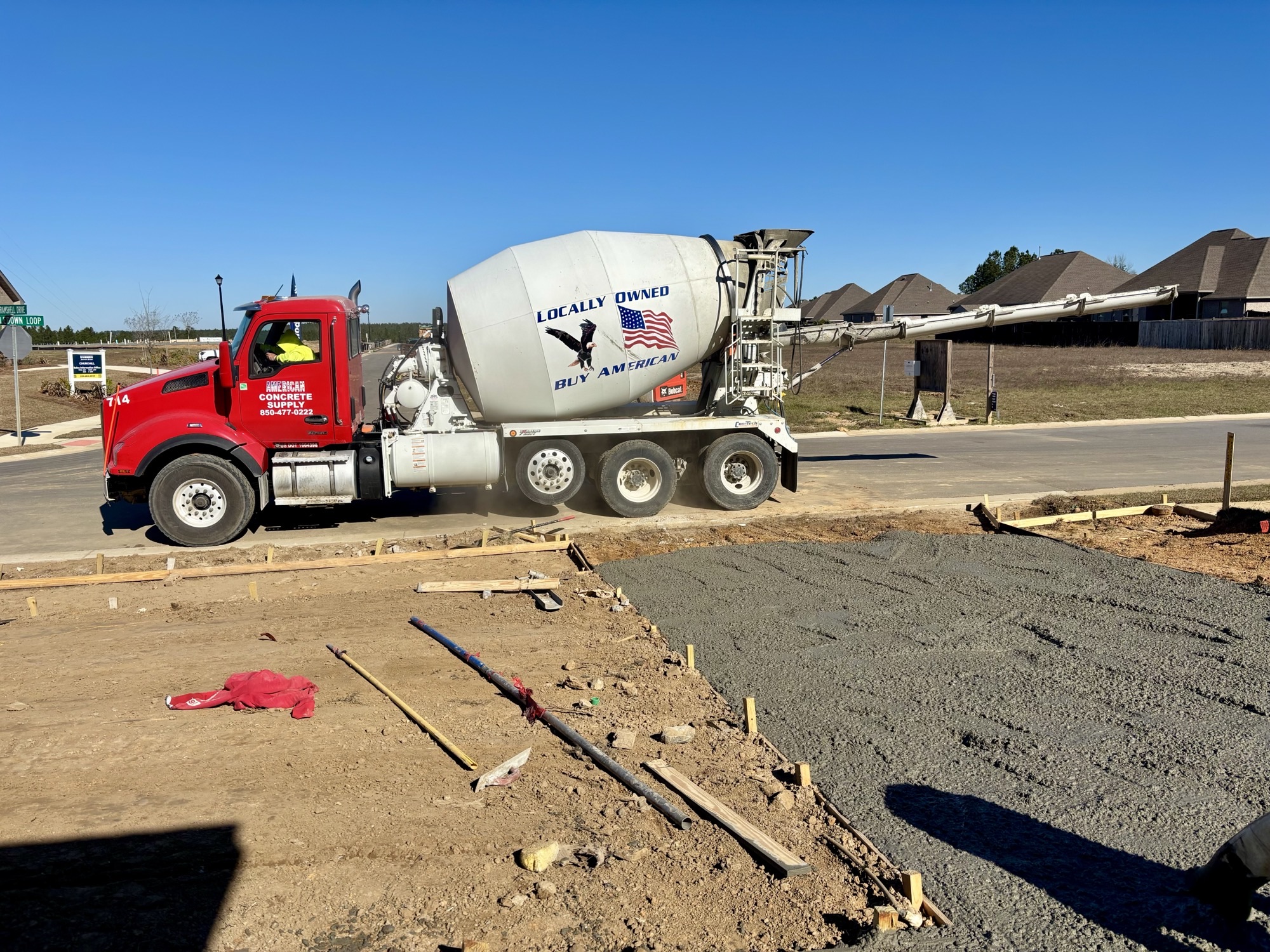
The “Little Stuff” Isn’t Little
Key Considerations for Working with Concrete
On residential work, small oversights can cause big headaches. Loose forms, incomplete prep, or cluttered work areas can slow down placement and finishing.
A quick pre-pour walkthrough can catch things like:
- Areas that need bracing
- Spots where the grade needs touch-up
- Materials or tools left in the wrong place
These details don’t take long to check — but they make the difference between a smooth morning and a stressful one.
It’s Still a Team Effort
Even on a backyard patio or driveway, the pour day involves more than just one crew. Good coordination between the builder, the placement team, and the supplier keeps things moving in the same direction.
Residential jobs might be smaller in scale, but they deserve the same level of planning and communication as any larger project.
Builders who stay organized and think ahead tend to have pours that run cleaner, faster, and with fewer surprises. That’s the kind of working relationship American Concrete Supply, Inc. supports every day.
Learn more at https://americanconcretesupplyinc.com/
In conclusion, pouring concrete for home builds requires careful consideration of various factors, including logistics, weather conditions, team coordination, and material selection. By keeping these details in mind, builders can ensure a successful and efficient pour day, ultimately leading to high-quality, long-lasting structures that add value to the home.
Furthermore, the aesthetic aspects of concrete should not be overlooked. Techniques like stamping, staining, or polishing can enhance the visual appeal of concrete surfaces, turning them into attractive features of the home. It’s essential to discuss these options with clients early in the planning stages to ensure their vision aligns with practical considerations.
Another important consideration is the potential for shrinkage cracks, which can occur as it cures and dries. Proper planning and execution of control joints can help manage these issues and maintain the aesthetics and integrity of the surface. These joints allow for the natural expansion and contraction, thereby minimizing the risk of cracking.
Moreover, understanding the curing process of concrete is essential for achieving optimal strength and durability. Curing involves maintaining adequate moisture and temperature conditions for a specific period after the pour to ensure the chemical hydration process occurs effectively. Home builders should implement curing methods like wet burlap, curing compounds, or insulated blankets to protect the fresh concrete from adverse weather conditions.
Additionally, different types of concrete, such as high-strength or fiber-reinforced, can offer various benefits depending on the intended use. For instance, high-strength is ideal for areas that will bear heavy loads, while fiber reinforcement can enhance durability and resist cracking. It’s crucial to collaborate with suppliers to choose the right type that meets the specific needs of each project.
Concrete is a vital material in modern construction, especially for residential projects. Understanding its various aspects, including composition, types, and applications, can significantly impact the success of home builds. For example, the choice between ready-mix and site-mixed can influence both the quality and efficiency of the pouring process. Ready-mix is often preferred for its consistency and convenience, while site-mixed allows for greater customization based on specific project needs.